Choosing a jon boat trailer is not just about matching hull length. Buyers also need to consider boat weight, launch conditions, storage space, and towing vehicle. A trailer that looks right in a dealer’s lot may feel awkward on a steep, muddy ramp. Small details matter: bunk spacing, winch height, tire condition, and where the boat rests.
This guide compares ten jon boat trailer types, from simple bunk designs to roller and multi-axle setups. It also looks at materials, frame styles, and useful options for different boats and routines. The distinctions can blur. A trailer may combine several features, so buyers should check its actual construction rather than rely on a label.
For a transparent editorial touch, our composite trailer specialist, Alex Reed, offers this practical reminder: “The best trailer is the one that supports your hull evenly and makes each launch predictable.” Treat that as a guiding principle, not a substitute for checking manufacturer specifications or getting a professional fit assessment. Measure carefully. Ask questions. And inspect the hardware up close. A little rust, a poorly placed roller, or a loose strap deserves attention. This overview helps buyers compare common designs, spot trade-offs, and choose with fewer surprises. Even then, the “perfect” choice may not exist; your usual ramp and storage space can change the answer.
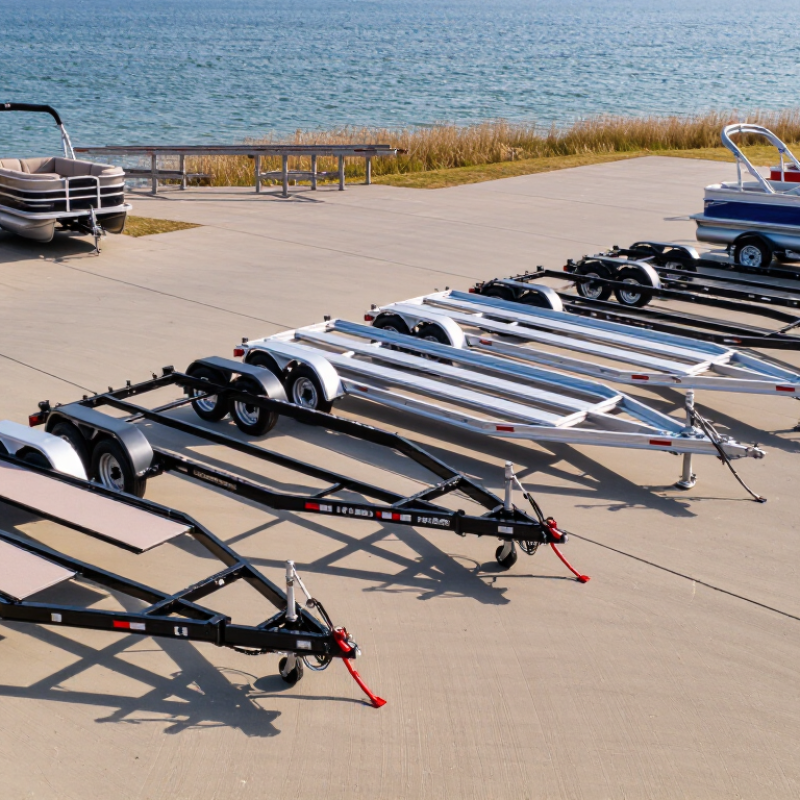
Jon boat trailers are best understood by how they carry and guide a hull, not by appearance alone. Most designs use longitudinal bunks, rollers, or a combination of both. Wide carpeted bunks spread weight across the flat bottom and help steady the boat during travel. Rollers reduce sliding effort, especially on steeper ramps, but concentrate pressure at contact points. That trade-off matters. Aluminum hulls can dent if supports are poorly positioned, so bunk spacing should match the hull.
Classification also reflects frame construction and running gear. Single-axle trailers suit many lighter boats and are easier to maneuver in tight yards. Tandem axles can carry more load and track steadily, yet add weight and tire-maintenance checks. Aluminum and galvanized-steel frames resist corrosion differently; freshwater and frequent salt exposure call for different care. Rinse the frame and inspect welds, fasteners, lights, and tires. Small details count.
Buyers should compare rated capacity with the boat, motor, fuel, battery, and gear combined. Check that the winch post pulls from the bow eye and that the transom rests securely near the rear supports. Fit varies. No category is perfect for every ramp. A trailer may look right in a yard but load awkwardly at a shallow launch. Measure the hull and consider actual launch conditions rather than guessing.
How Jon boat trailers are designed and classified, with indicative boat-length ranges.
Ranges are approximate examples, not fixed limits. Trailer features can overlap—for example, a trailer may be both aluminum and bunk-style. Always check the trailer’s rated capacity, dimensions, and fit for your loaded boat.
Ten practical Jon boat trailer configurations differ by frame construction and hull support. Galvanized channel frames commonly use bunks or rollers. Tubular steel frames also pair with bunks or rollers. Aluminum I-beam frames can carry either support style. Box-section frames are another option, with bunks or rollers. Adjustable multi-bunk frames spread support across several padded contact points. Hybrid bunk-roller setups combine steady support with easier launching. That makes ten configurations, though categories can overlap. Real trailers are rarely so tidy.
Frame choice affects weight, corrosion resistance, and stiffness; support choice affects loading and hull contact.
The National Marine Manufacturers Association’s 2024 recreational boating statistics report that about 95% of boats in use are under 26 feet. This helps explain the demand for compact towing setups, but it does not mean every small boat needs the same trailer. A shallow-draft Jon boat may sit unevenly on poorly adjusted bunks. Small details matter.
Tips: Measure the hull’s bottom width and check clearance around the keel before buying. Set bunks to support strong hull areas, not thin edges. Rollers can help at shallow ramps, but they may concentrate pressure. Recheck strap tension and winch alignment after the first tow. I would still inspect the fit in person; measurements alone can miss a crooked hull.
Top 10 Jon Boat Trailer Types Buyers Should Know: Materials, Axles, and Launching Features
Jon boat trailers vary by frame material, axle setup, and how they support the hull. Galvanized steel handles wet ramps well, while aluminum resists corrosion and weighs less. Painted steel can cost less, but chipped coating needs attention. A single axle often suits a light boat and is easier to maneuver. Tandem axles can carry heavier loads more steadily, though they add weight and maintenance. Check the trailer’s rated capacity against the boat, motor, fuel, and gear—not just the hull’s listed weight.
Tips: Match the support to your launch routine. Bunk trailers cradle the hull on carpeted rails; roller trailers can ease loading when ramp conditions allow. Tilt and drive-on designs may help at shallow launches, but neither makes every ramp simple. Measure the hull and confirm winch-post, fender, and tie-down clearances before buying.
Small details matter. A spare tire, adjustable bunks, and a properly positioned winch can save awkward moments at the water’s edge. Rinse salt and grit from the frame, hubs, and hardware after use. Even careful comparisons miss something: ramp slope, water level, and boat balance change how a trailer behaves. A setup that works beautifully at one launch may feel clumsy at another.
A jon boat’s flat bottom and light aluminum hull need steady, well-spaced support. A bunk trailer is often a practical match: carpeted or padded bunks spread the load and guide the hull during loading. Check that the bunks follow the hull’s shape, rather than pressing hard against a few points. Measure the boat’s actual length and width, including any motor or permanent fittings.
Roller trailers can make loading easier when the ramp is steep or the waterline changes, but rollers concentrate pressure. Confirm they suit your hull and are positioned to support it properly. A tilt trailer may help at a shallow launch, though it does not make an unsafe or unsuitable ramp safe. Measure twice. Small details matter.
Match the trailer to the places you launch, not just the boat. For soft, shallow shorelines, a light trailer that is easy to maneuver may be more useful than one built for frequent ramp use. On rough access roads, look closely at frame clearance, tire size, and the security of the winch post. Add the motor, fuel, battery, and gear when checking load capacity; overlooking these is an easy mistake. Leave room for adjustment, too. A trailer that looks right in a driveway may sit differently once the boat is aboard, and that can take a little tuning.
A jon boat trailer should fit the hull’s length, width, and loaded weight, not just its bare dimensions. Before buying, account for the motor, fuel, battery, and equipment. Leave capacity in reserve rather than treating the maximum rating as a target. Check that the bunks or rollers support the hull evenly, and confirm the winch post can hold the bow securely. A boat that sits crooked may point to poor adjustment, not a problem you should ignore.
Inspect the frame, welds, axle, and springs for cracks, bends, or heavy corrosion. Look for tire wear, sidewall damage, and the tire’s age; good tread alone does not tell the whole story. Spin each wheel and listen for grinding or roughness that may suggest bearing trouble. Test the lights, plug, winch strap, coupler, and safety chains. Small details matter.
After launching, rinse the trailer with fresh water, especially around the axle and brakes. Check tire pressure when the tires are cold, and tighten wheel nuts according to the trailer or vehicle manual. Grease bearings on the recommended schedule, using the specified method. Keep an eye on bunks and hardware, too; repeated launching can loosen fittings. A quick inspection takes minutes, but it is easy to skip when you are eager to get on the water.