Choosing among China’s top boat trailer manufacturers requires more than comparing prices and polished catalogs. Global buyers need evidence of engineering quality, production consistency, corrosion protection, and dependable after-sales support. A serious evaluation should examine frame materials, axle ratings, braking systems, winch posts, lighting, suspension, and spare-parts availability. Small details matter. A poorly sealed light can fail after one saltwater launch.
Marine equipment consultant Mark Ellison states, “A boat trailer is not an accessory; it is the boat’s first safety system.” This principle gives buyers a practical starting point. The best manufacturers explain how their designs handle different hull shapes, load distributions, road conditions, and storage environments. They also provide clear drawings, tested specifications, inspection records, and realistic delivery schedules. Claims alone are not enough.
China’s manufacturing sector offers strong capabilities, but quality can vary between suppliers. Some factories deliver excellent welded frames and customized configurations. Others may overlook documentation, finishing quality, or communication after shipment. That deserves scrutiny. Buyers should request factory videos, sample inspections, coating details, load-test reports, and references from comparable export markets. A reliable supplier welcomes these questions.
This guide introduces leading Chinese boat trailer manufacturers for global buyers. It considers product range, customization, manufacturing experience, export readiness, and service reliability. It also recognizes an uncomfortable truth: the lowest quotation may create higher ownership costs later. Freight damage, unavailable parts, or incorrect trailer dimensions can quickly erase initial savings. Careful verification remains essential. No supplier is perfect. The goal is a transparent, technically suitable, and dependable choice.
Boat Trailer Categories and Towing Capacities: 750 kg to 3,500 kg
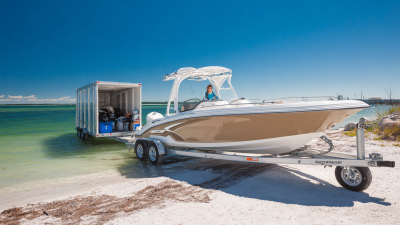
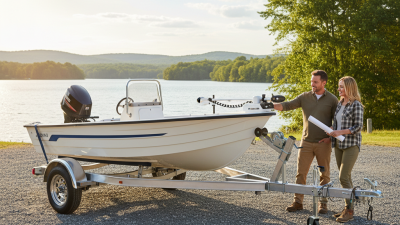
Choosing a boat trailer starts with the boat’s actual weight, not its brochure length. A 750 kg trailer suits small fishing boats, compact inflatables, and lightweight aluminum hulls. These trailers are usually single-axle designs. They are easier to maneuver in narrow storage areas. However, limited payload leaves little room for fuel, batteries, fishing gear, and water.
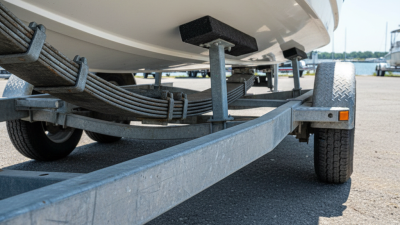
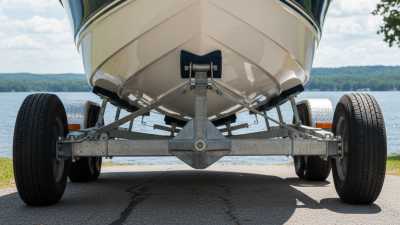
Trailers rated from 1,200 to 2,000 kg fit many family boats and modest cabin boats. Adjustable rollers, stronger winches, and corrosion-resistant frames improve daily handling. For larger boats, 2,500 to 3,500 kg tandem-axle trailers offer better stability during long-distance towing. Two axles distribute load more evenly, especially on uneven roads. Braking systems must match the trailer rating and towing vehicle. Capacity is not a suggestion.
In practical purchasing work, I check the loaded boat weight, tongue weight, axle rating, and frame dimensions together. A trailer can meet the advertised capacity yet still fit poorly. That mistake creates uneven loading and faster tire wear. It is easy to overlook spare-wheel clearance. It is also easy to underestimate saltwater corrosion. Rinse points, sealed lights, galvanized parts, and replaceable rollers matter more after months of use. Check the details twice. Global buyers should also confirm towing equipment requirements, because specifications and road rules differ between markets.
| Trailer Category | Typical Rated Capacity | Recommended Boat Length | Typical Axle Layout | Typical Trailer Weight | Brake Configuration | Common Applications |
|---|---|---|---|---|---|---|
| Light-Duty Utility Trailer | 750 kg | 3.6–4.9 m | Single axle | 180–280 kg | Usually unbraked | Small aluminum boats, dinghies, compact fishing boats, and personal watercraft. |
| Compact Single-Axle Trailer | 1,000 kg | 4.3–5.5 m | Single axle | 220–360 kg | Unbraked or surge brake | Small runabouts, center-console boats, and lightweight recreational craft. |
| Standard Single-Axle Trailer | 1,500 kg | 5.2–6.4 m | Single axle | 300–500 kg | Surge or hydraulic disc brake | Medium fishing boats, bowriders, ski boats, and small cabin boats. |
| Heavy Single-Axle Trailer | 2,000 kg | 5.8–7.3 m | Heavy-duty single axle | 400–650 kg | Hydraulic or electric-over-hydraulic brake | Larger bowriders, wake boats, fishing boats, and light cabin cruisers. |
| Tandem-Axle Recreational Trailer | 2,500 kg | 6.4–7.9 m | Tandem axle | 550–800 kg | Two-wheel or four-wheel hydraulic brakes | Large fishing boats, cabin boats, performance boats, and offshore-capable craft. |
| Heavy Tandem-Axle Trailer | 3,000 kg | 7.0–8.5 m | Tandem axle | 650–950 kg | Four-wheel hydraulic or electric brakes | Heavy cabin cruisers, offshore fishing boats, and larger fiberglass boats. |
| Heavy-Duty Boat Transport Trailer | 3,500 kg | 7.6–9.1 m | Tandem axle | 800–1,150 kg | Four-wheel hydraulic or electric brakes | Large cabin cruisers, offshore boats, commercial workboats, and high-load transport applications. |
China’s leading boat trailer manufacturers increasingly combine OEM output with documented quality systems. The ISO Survey 2022 reported more than 700,000 ISO 9001 certificates in China. This figure reflects a broad manufacturing base, not trailer quality alone. Buyers should request process maps, weld inspection records, coating thickness results, and batch traceability. A clean factory floor helps, but evidence matters more.
OEM capability becomes visible in practical details. Ask for monthly capacity, jig control, axle testing, and spare-parts planning. A reliable supplier should explain how galvanized frames resist saltwater corrosion and how rollers protect a hull during loading. Industry registration data from the National Marine Manufacturers Association shows millions of recreational boats operating in the United States. That installed base creates steady demand for compatible, road-ready trailers.
CE compliance needs careful interpretation. The European Commission’s Blue Guide states that CE marking is a manufacturer’s declaration of conformity for applicable EU legislation. It is not a universal quality certificate. The trailer’s design, braking system, lighting, materials, and intended use must be assessed against relevant requirements. Request the technical file, risk assessment, test reports, and Declaration of Conformity.
ISO 9001 cannot replace product testing. That distinction is easy to miss. A supplier may present excellent documents, yet a poorly matched axle or inaccurate load rating can still create field problems. Less paperwork, more verification.
China Top Boat Trailer Manufacturers for Global Buyers?
Selecting a boat trailer starts with matching specifications to the vessel, not the brochure price. In practical inspections, axle capacity is often the first detail I verify. A single axle may suit smaller boats and easier storage. Larger hulls usually need tandem axles for better load distribution and road stability. The rated capacity must exceed the boat, engine, fuel, battery, and equipment weight.
Brakes deserve equal attention. Hydraulic or electric systems should match the trailer’s gross load and intended towing conditions. Ask how brake lines, couplers, and emergency components are tested. A trailer can look strong while stopping poorly. That mistake is expensive. Tire size, wheel bearings, suspension travel, and lighting also affect daily reliability.
Galvanized steel helps resist saltwater corrosion, especially around crossmembers, rollers, and fasteners. However, galvanizing is not permanent protection. Scratches and trapped moisture still need regular inspection. Load ratings should be clearly marked and supported by test records, not estimated from appearance. I have seen buyers focus on polished frames and overlook uneven axle alignment. That detail can cause tire wear within weeks. A reliable manufacturer should provide dimensional drawings, material information, weld inspection details, and practical guidance for maintenance. Yet specifications can be misunderstood when local towing conditions are ignored. Verify road temperatures, launch ramps, storage practices, and the actual boat weight before placing an order.
The chart compares representative load ratings for common galvanized-steel boat trailer configurations. Single-axle trailers are generally suited to lighter boats, while tandem-axle designs provide higher carrying capacity and improved load distribution. Braking requirements vary by country, trailer weight, and gross trailer mass.
| Trailer configuration | Typical axle setup | Brake expectation | Frame material |
|---|---|---|---|
| Light boat trailer | Single axle | Often unbraked where legally permitted | Hot-dip galvanized steel |
| Medium boat trailer | Single or tandem axle | Commonly fitted with trailer brakes | Hot-dip galvanized steel |
| Heavy boat trailer | Tandem axle | Brakes normally required | Hot-dip galvanized steel |
Ratings shown are representative specification points in kilograms, not manufacturer-specific claims. Buyers should confirm the gross trailer mass, axle capacity, tire load index, coupling rating, brake system, and local road regulations before purchase.
For global buyers, a boat trailer is more than a steel frame with wheels. EU rules divide many trailers into categories by maximum authorised mass. The 750–3,500 kg range generally falls within category O2, above 750 kg and up to 3,500 kg. Confirm the classification before production, because local registration rules may differ.
A compliant trailer should carry a traceable VIN, usually a 17-character vehicle identification number, and a clear manufacturer plate. Inspect the coupling, brakes, axle rating, tyres, reflectors, rear lamps, indicators, and side markers. The lighting layout must remain visible when the boat is loaded. Ask for test records, drawings, load calculations, and conformity documents. A polished certificate is not enough. Details can still be wrong.
Tips: Request photos of the VIN plate and lighting harness before shipment. Measure the boat’s actual length, beam, and loaded weight, not catalogue figures. Check whether the trailer uses overrun braking for heavier configurations. Saltwater exposure also matters; hot-dip galvanising, sealed connectors, and corrosion-resistant fasteners deserve close inspection. One practical mistake is treating 3,500 kg as a safe carrying capacity. It usually describes the trailer’s maximum authorised mass, including the trailer itself. Recheck that calculation with the importer or inspection authority.
Pricing should be compared against specifications, not spreadsheets alone. In practical sourcing, a low quote often excludes lighting, corrosion protection, spare wheels, or export packaging. Grand View Research’s 2024 boat trailers market report projects steady mid-single-digit growth through 2030. That growth increases supplier competition, but quality still varies.
Request itemized prices in USD , including tooling, inspection, inland transport, and replacement parts. MOQ matters too. A first order of five units may be realistic for testing, while larger factories may request 20 or more.
Lead time needs written milestones. Ask for drawing approval, material preparation, welding, coating, and final inspection dates. A 30-day promise can become 55 days during peak production. NMMA’s 2023 Recreational Boating Statistical Abstract recorded approximately 146,000 new powerboat sales in the United States. That demand can tighten trailer production before the summer season. Plan early. Not glamorous, but necessary.
Warranty terms should state coverage periods, excluded components, and claim evidence. A useful offer includes rust claims, axle support, brake parts, and response targets. After-sales support should provide manuals, part numbers, videos, and remote troubleshooting. Some suppliers promise two years, yet answer slowly after shipment. That weakness deserves attention.
I would also request a sample trailer or independent inspection before a bulk order. It costs more initially. Still, skipping it may create higher costs through bent frames, mismatched couplers, or unavailable parts.