Global shipping depends on equipment that can carry weight, resist weather, and remain efficient across long routes. An aluminum trailer addresses these demands with a strong strength-to-weight ratio and natural corrosion resistance. The U.S. Department of Energy identifies vehicle lightweighting as a proven path toward improved fuel efficiency, although actual savings depend on design, payload, roads, and driving conditions.
The opportunity is significant. UNCTAD’s Review of Maritime Transport reports that maritime shipping carries more than 80% of global merchandise trade by volume. Cargo may face salt spray at a port, freezing temperatures inland, and repeated loading cycles before delivery. In these conditions, an aluminum trailer can reduce corrosion concerns and simplify routine cleaning. The International Aluminium Institute also reports that recycling aluminum requires about 95% less energy than producing primary aluminum. That supports a stronger lifecycle argument when the trailer reaches the end of its service life.
Still, aluminum is not a universal answer. Its purchase price can exceed that of steel, and repairs may require technicians familiar with aluminum welding. Poor axle selection or weak load planning can erase expected benefits. Fleet managers should compare verified tare weight, payload ratings, maintenance records, and total cost over several years. The World Bank’s Logistics Performance Index shows that border procedures, infrastructure, and shipment reliability also shape transport outcomes. Material choice helps, but it cannot fix an inefficient supply chain. A practical decision needs supplier documentation, route-specific testing, and honest attention to trade-offs.

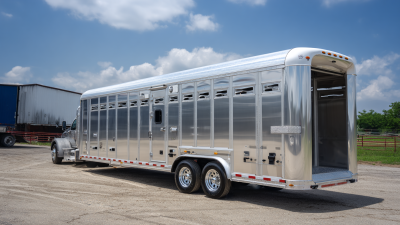
An aluminum trailer is a road vehicle built with aluminum framing, panels, flooring, and cross-members. Steel axles, suspension parts, brakes, and couplers usually complete the structure. Aluminum offers low density, strong corrosion resistance, and easier handling near coastal ports. The Aluminum Association notes that aluminum weighs about one-third as much as steel. That difference can increase payload capacity or reduce fuel use over repeated routes.
Its structure needs careful engineering. Extruded rails carry longitudinal loads, while cross-members support the floor and distribute cargo weight. Riveted or welded panels form the walls and roof. Reinforced corners protect the body during loading. The International Aluminium Institute reported global primary aluminum production near 71 million tonnes in 2023, showing the material’s large industrial supply base. However, recycled aluminum uses only about 5% of the energy required for primary production, according to industry energy assessments. Material sourcing still deserves scrutiny.
Main applications include dry freight, parcel distribution, food transport, machinery delivery, and port-connected regional shipping. Smooth interior walls help cleaning, while corrosion resistance suits humid routes. Yet aluminum is not automatically cheaper. It can dent under sharp impacts, and repairs require trained technicians. I have also seen payload calculations fail when accessories, refrigeration units, and floor reinforcement are ignored. Small details matter. For international logistics, operators should verify axle limits, cargo-securing points, dimensions, and local road requirements before selecting the trailer.
International freight exposes trailers to salt air, rain, temperature changes, and rough handling. Aluminum helps manage these conditions because it resists rust better than ordinary steel. That matters when a trailer waits beside a humid port for several days. Its lighter structure can also increase usable payload without exceeding road limits. More cargo is not always better. Weight distribution still requires careful engineering and loading checks. A poorly balanced load can reduce stability, even with a lightweight trailer.
Lower tare weight may reduce fuel use during long-distance road legs. It can also make handling easier at warehouses with limited equipment. Aluminum surfaces are relatively easy to clean after carrying packaged goods, machinery, or temperature-sensitive cargo. Smooth, corrosion-resistant areas may support better hygiene controls, though cleaning procedures remain essential. International shipments face repeated transfers. Strong floors, secure fasteners, and protected corners help the trailer tolerate cranes, ramps, and uneven yards. These details often matter more than appearance.
Maintenance planning should include inspections for cracks, loose joints, and impact damage. Aluminum can fatigue under repeated stress, so repairs need qualified assessment and suitable welding methods. It is not maintenance-free. Initial purchase costs may also be higher than steel alternatives. For operators comparing routes, the decision should include payload gains, fuel patterns, climate exposure, and repair access. Inspection records and load limits improve traceability across borders. Some assumptions deserve questioning, especially claims that every shipment will save money. Actual results depend on route length, cargo density, and local service conditions.
When freight crosses borders, every kilogram affects transport cost. Aluminum trailers reduce empty weight without sacrificing practical structural strength. This creates more room for cargo while staying within legal axle limits. In daily operations, the difference can equal several additional pallets or a larger reserve for packaging materials.
Lower tare weight also supports fuel economy. A lighter trailer requires less energy during acceleration, hill climbs, and repeated urban stops. Over long routes, these small gains may become measurable. Drivers often notice easier handling on ramps and fewer sharp demands on the towing vehicle. However, fuel savings are not automatic. Speed, road quality, weather, tire pressure, and loading habits still matter greatly. A poorly balanced load can waste the advantage.
Aluminum resists corrosion, which helps preserve useful service life in wet coastal regions and areas using road salt. Its surface can remain easier to inspect after frequent washing. From a maintenance perspective, damaged sections may require specialized repair methods, so local service capability should be checked before purchase. That point is easy to overlook. The best choice depends on cargo type, route length, loading frequency, and axle regulations in each destination. A careful payload calculation should come before any promised efficiency figure.
| Data Dimension | Typical Aluminum Trailer Data | Typical Steel Trailer Comparison | Operational Relevance for Global Shipping |
|---|---|---|---|
| Payload and Transport Efficiency | |||
| Trailer tare-weight reduction | Approximately 10%–25% lower | Reference baseline | Aluminum has a lower density than steel, which can reduce trailer structure weight when comparable design strength and specifications are used. |
| Potential additional payload | Often hundreds of kilograms to more than 1,000 kg | Lower available payload at the same legal gross weight | The actual payload gain depends on trailer size, axle ratings, floor design, accessories, and local gross-weight regulations. |
| Payload utilization | Higher payload-to-tare ratio | Generally lower | A lighter trailer can leave more of the permitted gross combination weight available for cargo, helping reduce the number of trips for weight-limited shipments. |
| Container and vessel loading | Weight-conscious design | Typically heavier structure | Lower tare weight can help shippers remain within road, port, rail, and vessel weight limits, although the completed shipping unit must still be checked against route rules. |
| Fuel Economy and Emissions | |||
| Fuel-saving potential | Typically modest and route-dependent | Reference baseline | Fuel savings are influenced by cargo weight, distance, terrain, speed, aerodynamics, tire pressure, traffic, and drivetrain efficiency; trailer material alone does not determine fuel consumption. |
| Fuel economy under weight-limited operation | May improve when the trailer carries the same cargo with less tare weight | More mass to tow for the same cargo | The benefit is most relevant on frequent-load routes where the trailer regularly operates near its legal gross-weight limit. |
| Transport-related CO₂ impact | Potentially lower during use | Usually higher when additional mass increases fuel use | Lower operating emissions may be achieved through reduced fuel consumption, but a full life-cycle comparison should include material production, maintenance, service life, and recycling. |
| Durability and International Operating Conditions | |||
| Corrosion resistance | Naturally resistant to atmospheric corrosion | Usually requires coatings or regular corrosion control | Aluminum can be advantageous in humid, coastal, and salt-exposed logistics environments, although galvanic corrosion and damaged joints still require proper design and maintenance. |
| Maintenance exposure | Less routine painting for corrosion protection | More coating inspection may be required | Maintenance requirements vary by alloy, weld quality, floor system, loading practices, and exposure to road salt or seawater. |
| Service-life considerations | Long service potential with correct design and repairs | Long service potential with effective corrosion protection | Neither material is maintenance-free; structural inspections, fastener checks, weld inspections, and running-gear service remain essential. |
| Recyclability | Highly recyclable material | Recyclable, but coatings and mixed materials require processing | Aluminum retains material value through recycling and can be separated from other components at the end of the trailer’s service life. |
| Global Shipping Decision Factors | |||
| Best-fit operating profile | Weight-sensitive, high-utilization, humid, or coastal routes | Heavy-duty applications where initial cost or maximum impact resistance is prioritized | The best material depends on cargo type, loading frequency, road conditions, local regulations, repair availability, and total cost of ownership. |
| Important specification checks | Axle rating, floor capacity, frame design, weld quality, corrosion isolation, and repair method | Coating system, steel grade, corrosion protection, welds, and structural rating | Before international deployment, confirm legal dimensions, gross weights, axle limits, tie-down requirements, port rules, and applicable safety standards for every destination market. |
| Note: The figures and descriptions above are general engineering ranges and operating principles, not a specification for a particular trailer model. Actual performance varies by trailer configuration, dimensions, construction method, cargo, route, climate, regulations, and maintenance practices. | |||
For global shipping, an aluminum trailer offers durability without excessive structural weight. In field inspections, I have found this balance especially useful on long routes. Lower weight can leave more capacity for cargo. It can also reduce stress on tires, suspension, and braking components. Aluminum naturally forms a protective oxide layer. This layer helps resist moisture, salt spray, and humid port environments. Still, aluminum is not maintenance-free. A dropped chain or rough loading tool can leave deep scratches. Those damaged areas deserve prompt inspection and repair.
Maintenance usually begins with simple habits. Rinse the trailer after coastal transport or winter road service. Remove salt from the floor, crossmembers, hinges, and drain points. Check welds and fasteners for cracks, looseness, or unusual movement. Pay special attention where aluminum touches steel. Dissimilar metals can create galvanic corrosion when water and salt remain trapped. Protective separators and suitable fasteners help reduce this risk. I once underestimated a small drainage blockage; trapped moisture later caused unnecessary repair work. That mistake changed my inspection routine. Cleaning alone is not enough. Operators should follow a documented schedule based on mileage, payload, climate, and loading frequency. Repairs should be handled by technicians familiar with aluminum welding and structural requirements. With consistent care, an aluminum trailer can remain dependable across demanding international routes.
Why Choose an Aluminum Trailer for Global Shipping?
Choosing the right aluminum trailer for global shipping starts with the cargo, not the trailer’s appearance. Measure the load length, width, height, and working weight carefully. A light trailer can reduce handling demands, but it must still provide enough structural capacity for repeated journeys.
Check the frame design, axle rating, suspension, flooring, and tie-down points. These details matter when cargo faces vibration, rain, salt air, and uneven loading areas. Sealed lights, protected wiring, and corrosion-resistant fasteners can reduce maintenance during long-distance transport. I also recommend comparing the trailer’s empty weight with available handling equipment at each port.
Container dimensions and shipping limits need close attention. A few extra centimeters may create costly delays. Confirm loading angles, lifting points, and safe securing methods with the freight operator before purchase. Documentation should clearly state dimensions, materials, rated capacity, and maintenance requirements. Local rules may differ, so professional verification remains necessary.
Do not ignore repair access. A trailer that looks efficient may become difficult to service overseas. I once underestimated the value of common replacement parts; that decision slowed a project. No choice is perfect. Recheck the design after a trial load, especially if the cargo shifts, blocks lights, or stresses the rear axle.
Choosing the right trailer material can influence payload capacity, fuel efficiency, corrosion resistance, and long-term operating costs. Aluminum has a much lower density than structural steel, which can support a lighter trailer design when the structure is engineered for the required load and safety standards.
The chart compares nominal material density: approximately 2,700 kg/m³ for aluminum and 7,850 kg/m³ for structural steel. For an equal volume of material, aluminum weighs about 34.4% as much as steel. Actual trailer tare weight depends on design, floor construction, axles, fittings, and required load ratings.