For global buyers, choosing a trailer is more than comparing prices and polished photographs. It affects launching, loading, storage, shipping, and long-term confidence. An aluminum boat trailer offers a practical balance of light weight, corrosion resistance, and towing efficiency. These benefits matter near saltwater, where a steel frame can show rust around bolts, welds, and brake components. They also matter during international transport, when every kilogram can influence handling and freight costs.
Marine trailer engineer David Saylor explains, “The trailer is part of the boat’s safety system, not an accessory.” That view is easy to overlook. A well-built aluminum boat trailer should match the boat’s length, hull shape, axle capacity, winch position, and expected water conditions. Buyers should inspect bunk alignment, frame welds, lighting protection, tire availability, and replacement-part support. Small details become expensive problems when a trailer crosses an ocean.
Aluminum is not perfect. It can suffer from galvanic corrosion when incompatible metals remain wet together. Some lightweight designs may also feel less forgiving on rough roads. That deserves honest attention. The right choice depends on engineering, not material preference alone. Global buyers should request load ratings, maintenance guidance, corrosion-control instructions, and clear warranty terms before ordering.
Picture the first launch: clean rollers, a steady winch, and no struggle at the ramp. That is the real promise. An aluminum boat trailer should make ownership simpler, safer, and more predictable, wherever the boat eventually travels.
An aluminum boat trailer is a wheeled support system designed to carry and launch a boat on land. Its frame usually uses marine-grade aluminum, galvanized hardware, adjustable bunks, rollers, lights, and a coupling system. Unlike a boat itself, the trailer must match the hull’s length, width, weight, and balance.
Weight matters. Aluminum frames are often lighter than comparable steel frames, so a suitable towing vehicle may use less fuel. This lighter structure can also make hand positioning easier at a ramp. In coastal areas, aluminum resists surface corrosion well, especially when rinsed with fresh water after saltwater use. However, it is not maintenance-free. I once assumed aluminum could be ignored after launching. That assumption was too simple. Salt can still affect fasteners, wiring, brakes, and contact points.
For global buyers, the practical definition includes more than the frame material. Check the trailer’s rated capacity, axle design, braking equipment, tire specifications, and lighting requirements. These details may differ between countries and road systems. The boat should sit evenly on the bunks, with secure straps and enough support near the hull’s strongest sections. A poorly matched trailer can create vibration, uneven loading, or difficult launching. Measure carefully. Even a small mismatch matters. Ask for documented test data, corrosion guidance, replacement-part availability, and clear assembly instructions. The best choice depends on local roads, climate, towing habits, and the boat’s actual loaded weight.
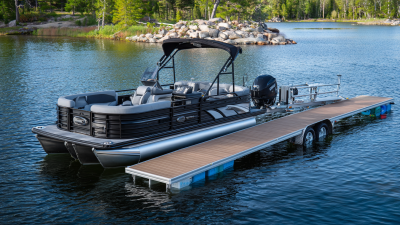
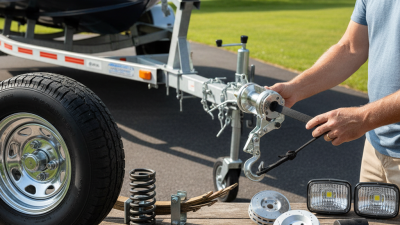
An aluminum boat trailer is a towable support frame made primarily from aluminum alloy. It carries a boat on bunks or rollers and includes components such as an axle, wheels, winch stand, coupler, lights, and safety chains. Aluminum is widely selected for its lower density and natural oxide layer, which can help reduce weight and improve resistance to corrosion in marine environments.
Approximate material densities at room temperature: aluminum alloy 6061, carbon steel, and stainless steel 304. Lower density can help reduce trailer frame weight, while the final towing capacity depends on the complete trailer design and component ratings.
For global buyers, aluminum construction offers a practical balance between low weight and daily durability. A lighter trailer can reduce towing strain, fuel use, and handling effort during launch. This matters when roads, ramps, and storage spaces differ between countries. Less weight helps. It can also make manual positioning easier near narrow waterfronts or crowded storage areas.
Aluminum naturally resists rust, especially in wet environments and coastal regions. However, corrosion protection still requires attention. Salt, trapped water, and contact with dissimilar metals can damage fittings over time. Rinsing the frame after saltwater use is simple, but many owners neglect it.
Proper drainage holes, sealed fasteners, and isolated metal connections improve long-term reliability. A well-designed frame should also distribute the boat’s weight evenly, preventing unnecessary stress around the axles and support points.
Global buyers should examine weld quality, axle capacity, lighting compatibility, and replacement-part availability before purchase. Local service access can matter more than a low initial price. Aluminum may dent more easily than steel after a hard impact, even though it will not develop ordinary red rust. That trade-off deserves honest consideration.
Buyers should check the trailer’s loaded capacity, not only its empty weight, and confirm that its dimensions suit local towing requirements. Small details matter. A durable finish, adjustable supports, and clear maintenance guidance can make international ownership far less complicated.
Aluminum weighs about 2.70 g/cm³, while steel measures roughly 7.85 g/cm³, according to ASM material data. This difference can reduce towing weight and improve handling. However, light construction does not guarantee safe capacity. Check the gross trailer weight rating, axle rating, tire load index, and tongue weight. Measure it twice.
The NMMA 2024 Statistical Abstract records approximately 11.6 million registered recreational boats in the United States. That broad market includes different hull shapes, loading habits, and transport distances. A suitable trailer needs adjustable bunks or rollers, strong cross-members, and corrosion-resistant fasteners. For saltwater use, inspect welds, brake components, hubs, and wiring after every launch. Aluminum resists general corrosion, but galvanic corrosion can appear where dissimilar metals touch.
The U.S. Coast Guard’s 2023 Recreational Boating Statistics identifies operator inattention among leading accident factors. Trailer design cannot fix careless loading, yet clear indicators can reduce mistakes. Look for visible tie-down points, a reliable winch post, balanced bunk support, and a properly sized coupler. Verify lighting and braking requirements for the destination market. Metric measurements also prevent confusion during international purchasing. A small mismatch can become expensive. Personally, I would question any specification sheet that lists capacity without explaining testing conditions. Survivability depends on maintenance, road quality, and actual boat weight—not aluminum alone.
Why Choose an Aluminum Boat Trailer for Global Buyers?
How to Match Trailer Design with Boat Requirements
An aluminum boat trailer suits buyers who need low weight, corrosion resistance, and easier handling. However, material alone does not guarantee a safe match. The trailer must fit the boat’s length, beam, hull shape, and loaded weight. Check the boat’s actual weight with fuel, batteries, safety equipment, and personal gear. Dry weight is often misleading.
Measure carefully. A deep-V hull may need adjustable rollers or properly placed bunks. A flat-bottom boat usually requires broader, stable support. The keel should carry reliable support without forcing pressure onto fragile hull sections. Set the winch post so the bow rests firmly against the stop. Leave no unnecessary movement.
I have seen owners choose trailers by length alone. That mistake can create poor balance and excessive tongue weight. It can also make launching awkward. A lighter aluminum frame may help smaller vehicles, but the axle, tires, brakes, and coupler must match the total load. Local towing rules still matter. Verify lighting, braking, registration, and maximum road weight before purchase.
Small details matter. Saltwater use calls for protected hardware and regular rinsing. Freshwater trailers still need inspection. Check welds, rollers, bunks, tire pressure, and wheel bearings before long trips. My own early setup was acceptable, not perfect. The rear supports sat slightly too far forward, and the boat needed extra adjustment during loading. A careful trial fit would have exposed that weakness sooner.
| Boat Profile | Typical Boat Size | Typical Loaded Boat Weight | Recommended Trailer Configuration | Axle and Braking Guidance | Recommended Tongue Load | Key Aluminum Trailer Design Features |
|---|---|---|---|---|---|---|
| Compact Fishing Boat | 4.0–5.0 m 13–16.5 ft |
300–700 kg 660–1,540 lb, including engine, fuel and equipment |
Single-axle trailer with adjustable winch post, keel rollers and two or more carpeted bunk supports. | Single axle commonly suitable up to approximately 1,500 kg gross trailer mass. Brakes should follow the destination country’s legal requirements and towing vehicle limits. | Approximately 7–10% of loaded trailer mass, measured at the coupling. | Lightweight aluminum frame, sealed or protected fasteners, corrosion-resistant rollers and a replaceable rear cross member. |
| Aluminum Utility or Jon Boat | 4.5–5.5 m 15–18 ft |
450–900 kg 990–1,980 lb |
Single axle with adjustable bunks or wide support pads. A low center of gravity is useful for shallow-hull designs. | Hydraulic, mechanical or overrun braking may be required depending on gross trailer mass and local regulations. Select the axle with capacity above the actual loaded mass. | Approximately 7–10%, while maintaining stable coupling load within vehicle and hitch limits. | Wide longitudinal bunks, reinforced transom support, strong tie-down points and drainage-friendly frame sections. |
| Family Bowrider or Runabout | 5.5–6.5 m 18–21 ft |
700–1,500 kg 1,540–3,307 lb |
Heavy-duty single axle at the lower end of the range; tandem axle is preferable when the loaded mass approaches or exceeds about 1,500 kg. | Brakes on one or more axles are commonly appropriate for this weight range. Confirm the required braking system with local road regulations. | Approximately 7–10% of loaded trailer mass, with correct weight distribution around the axle group. | Adjustable bunk brackets, multiple keel rollers, stronger tongue section and corrosion-isolated steel components where required. |
| Rigid Inflatable Boat | 5.0–7.0 m 16.5–23 ft |
500–1,800 kg 1,102–3,968 lb |
Adjustable roller or bunk trailer designed around the hull tubes, with sufficient clearance for the outboard and transom. | Single or tandem axle depending on loaded mass. Braking equipment should be selected from the trailer’s gross rating and the applicable national rules. | Approximately 7–10%, avoiding excessive load on the coupling caused by rear-mounted engines or fuel tanks. | Non-abrasive supports, adjustable side guides, protected light wiring and a removable rear light bar for launching access. |
| Pontoon or Wide-Beam Recreational Boat | 5.5–8.0 m 18–26 ft |
900–2,500 kg 1,984–5,512 lb |
Purpose-built tandem trailer with a broad support structure, adjustable bunks and adequate clearance for pontoons or lifting strakes. | Tandem axles are generally more suitable. Brakes on the required axle set should be matched to the gross trailer mass and local standards. | Approximately 7–10%, checked after the boat, battery, fuel and removable accessories are loaded. | Wide cross members, reinforced bunk brackets, high-strength coupler, galvanized or isolated hardware and generous turning clearance. |
| Offshore Fishing Boat | 6.5–8.0 m 21–26 ft |
1,500–3,000 kg 3,307–6,614 lb |
Tandem-axle trailer with adjustable bunks, keel support and a reinforced A-frame tongue. Consider load equalization across the hull. | Brakes are normally required or strongly advisable at this mass. Use an axle-group rating that exceeds the measured loaded trailer mass. | Approximately 7–10%, subject to the tow vehicle, coupling and national towing limits. | High-capacity winch stand, heavy transom supports, sealed lighting, replaceable wear parts and enhanced corrosion protection for saltwater use. |
| Cabin or Heavy-Cruiser Boat | 8.0–10.0 m 26–33 ft |
3,000–5,000 kg 6,614–11,023 lb |
Heavy tandem or multi-axle trailer engineered specifically for the hull’s length, center of gravity and transport route. | Multiple braked axles, a correctly rated coupling and a towing vehicle with sufficient gross combination capacity are essential. Local type-approval rules may apply. | Use the legally permitted coupling load; a planning target of approximately 7–10% must be verified against all vehicle and hitch limits. | Engineered frame reinforcement, adjustable hull supports, high-capacity suspension, safety chains and corrosion protection at dissimilar-metal joints. |
Maintenance, shipping, and ownership costs often shape a trailer’s real value. Aluminum weighs about one-third as much as steel, according to data from The Aluminum Association. That lower density can reduce handling effort and may improve payload flexibility. It does not guarantee lower fuel costs. Hull weight, tire pressure, and towing distance matter more than many buyers expect.
Aluminum resists red-rust corrosion, but it is not maintenance-free. Saltwater can attack fasteners, axles, wiring, and galvanic contact points. Rinse the frame after every coastal launch. Inspect welds, rollers, lights, and brake components before long trips. The U.S. Coast Guard’s recreational boating safety reports consistently identify equipment and steering issues among reported accident factors. Trailer neglect can become a safety problem.
International shipping also requires accurate dimensions and weight. A lighter trailer may reduce handling challenges, but oversized freight charges can still dominate the quotation. The International Maritime Organization emphasizes verified gross mass for containerized cargo, so weigh the packed unit carefully.
Tips:
Photograph the trailer before loading. Record frame length, width, height, and packed weight. Use isolation washers between dissimilar metals. Keep spare light connectors and rinse equipment available. Ask for corrosion-resistant hardware, but verify the specification. I have seen buyers focus on aluminum alone and overlook the axle rating. That is an expensive mistake. The better decision compares local parts access, service skills, shipping terms, and launch conditions. Research from the International Aluminium Institute also notes that aluminum remains highly recyclable, supporting longer material value after service life.