
China Top 10 CNG Bus Engine Parts Suppliers?
China’s CNG bus market is changing quickly, but reliable engine parts remain the practical foundation of fleet performance. The International Energy Agency’s Global Gas Security Review 2024 highlights continuing attention to gas supply resilience and infrastructure investment. That matters to bus operators. A damaged injector, valve, gasket, or turbocharger can turn a crowded city route into an expensive roadside delay.
NGV Global’s industry statistics also show the continuing importance of natural gas vehicles in public transport, especially where fleets need predictable range and established refueling networks. However, supplier quality differs sharply. Certifications, machining accuracy, material traceability, warranty response, and export experience deserve more attention than attractive catalog prices. Small details matter. A poorly finished sealing surface may cause repeated leakage after installation. This is not always visible in product photos.
Amy Davis, former President of New Power at Cummins, has emphasized that “natural gas engines are a proven technology available today.” Her point reflects an important reality: dependable Cng Bus Engine Parts can support lower-emission fleet operation, but only when maintenance standards remain equally strong. Parts alone cannot compensate for poor calibration, neglected filters, or incorrect torque settings.
This guide examines ten Chinese suppliers connected with Cng Bus Engine Parts, using public company information, product coverage, manufacturing capability, and service evidence. It is not an official ranking. Some supplier data remains incomplete, and that limitation should be acknowledged. Buyers should verify current certificates, engine compatibility, batch consistency, and after-sales commitments before placing orders. The best supplier is not always the largest. Often, it is the one that answers clearly when a bus stops at 6:20 a.m.
What Are CNG Bus Engine Parts and Why Do They Matter?
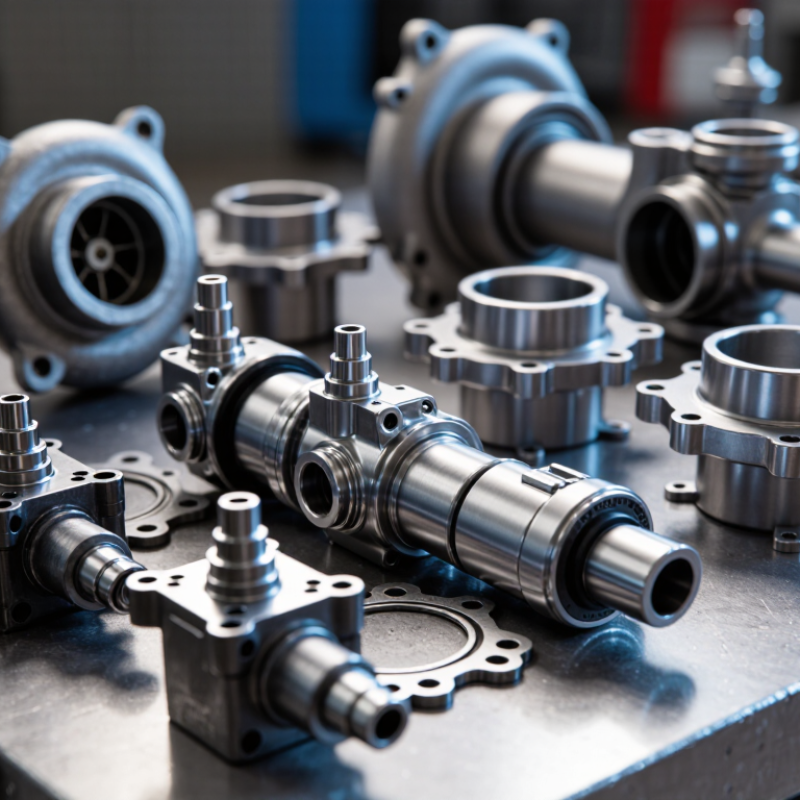
CNG bus engine parts are the working network behind clean, controlled combustion. They include high-pressure cylinders, shut-off valves, pressure regulators, injectors, fuel rails, sensors, ignition components, gaskets, and engine-control software. Each part must manage gas safely and maintain stable pressure. A small injector error can cause rough idling, higher fuel use, or difficult cold starts. The system is only as strong as its weakest seal.
Their importance is clear in daily service. NGV Global’s 2023 statistics reported more than 28 million natural-gas vehicles worldwide, increasing demand for dependable replacement parts. CNG engines also operate under high thermal stress. Regulators and injectors must respond quickly during acceleration, while sensors protect the engine from lean or overly rich mixtures. UNECE Regulation No. 110 and ISO 15500 define important safety and performance requirements for CNG components. These references help buyers compare materials, pressure ratings, and testing records.
Maintenance evidence matters more than attractive catalog claims. Inspectors should check regulator response, injector balance, hose condition, valve sealing, and electronic fault history. The IEA’s Global Methane Tracker 2024 estimated about 120 million tonnes of methane emissions from fossil-fuel operations in 2023. That figure reminds operators that leakage control is not a minor detail. Still, no parts list is perfect. Real routes, weather, fuel quality, and maintenance habits can change service life. Reliable suppliers should provide traceable test data, installation guidance, and field feedback. Some buyers overlook the last point. That is a costly mistake.
China Top 10 CNG Bus Engine Parts Suppliers? - What Are CNG Bus Engine Parts and Why Do They Matter?
| No. | CNG Engine Part | Main Function | Common Materials | CNG-Specific Requirement | Typical Inspection Points | Why It Matters |
|---|---|---|---|---|---|---|
| 1 | CNG Fuel Injector | Meters and atomizes gaseous fuel into the intake system. | Stainless steel, nickel alloys, engineered polymers, elastomers. | Stable flow at gas pressure, resistance to dry-gas wear, and leak-tight seals. | Flow balance, response time, coil resistance, leakage, connector condition. | Incorrect fuel delivery can cause misfire, high emissions, poor power, and difficult starting. |
| 2 | Gas Pressure Regulator | Reduces high-pressure gas to a controlled engine supply pressure. | Aluminum alloy, brass, stainless steel, diaphragm elastomers. | Pressure stability, thermal management, pressure-relief protection, and gas compatibility. | Inlet and outlet pressure, shut-off performance, diaphragm condition, gas leakage. | Pressure fluctuation directly affects air-fuel ratio, engine response, and safety. |
| 3 | CNG Gas Filter | Removes particles, oil residue, and contaminants from the fuel stream. | Aluminum or steel housing, cellulose or synthetic filter media. | Adequate filtration efficiency with low pressure drop and compatible seals. | Filter restriction, media damage, housing corrosion, seal leakage. | Clean gas protects injectors, regulators, valves, and combustion components. |
| 4 | Spark Plug | Ignites the compressed air-fuel mixture in a spark-ignition CNG engine. | Steel shell, ceramic insulator, nickel or precious-metal electrode. | Correct heat range, electrode gap, insulation, and resistance to sustained high-temperature operation. | Electrode erosion, gap, carbon deposits, insulator cracks, torque, and thread condition. | Reliable ignition supports smooth combustion, fuel economy, and low misfire rates. |
| 5 | Ignition Coil | Converts low-voltage electrical power into high voltage for the spark plug. | Copper windings, laminated magnetic core, epoxy resin, high-temperature plastics. | High dielectric strength, thermal durability, vibration resistance, and accurate energy output. | Primary and secondary resistance, insulation, output energy, connector fit, heat damage. | Weak ignition energy can result in misfires, reduced torque, and increased exhaust emissions. |
| 6 | Engine Control Sensors | Measure pressure, temperature, oxygen concentration, speed, and position. | Stainless steel, ceramics, semiconductor elements, sealed polymers. | Accurate readings under vibration, heat, moisture, and gaseous-fuel operating conditions. | Signal accuracy, calibration, wiring, connector sealing, response time, diagnostic codes. | Sensor errors can cause incorrect fueling, unstable idle, poor emissions control, or derating. |
| 7 | CNG Shut-Off and Check Valves | Control gas flow and prevent unintended reverse flow or release. | Brass, stainless steel, aluminum alloy, fluorocarbon or other compatible seals. | Pressure rating, rapid isolation, gas compatibility, and dependable sealing. | Leak testing, actuation, cracking pressure, corrosion, thread and fitting condition. | These parts are essential for fuel-system isolation and protection during faults or maintenance. |
| 8 | Turbocharger Assembly | Uses exhaust energy to increase intake-air mass and engine efficiency. | Cast or forged steel, nickel-based heat-resistant alloys, aluminum compressor components. | Correct boost control, thermal resistance, shaft balance, and compatibility with the engine calibration. | Shaft play, wheel damage, oil leakage, boost pressure, actuator operation, abnormal noise. | Proper boost improves power density and helps maintain bus performance under heavy load. |
| 9 | Valve Train Components | Controls the opening and closing of intake and exhaust valves. | Hardened alloy steel, sintered metal, heat-resistant valve materials. | Wear resistance, accurate timing, suitable valve-seat hardness, and high-temperature durability. | Valve clearance, cam and follower wear, valve-seat sealing, spring condition, timing accuracy. | Valve-train health affects compression, combustion efficiency, noise, and engine durability. |
| 10 | Gaskets and Sealing Components | Prevent leakage of gas, coolant, oil, and combustion pressure. | Multi-layer steel, graphite, fiber composites, fluorocarbon and silicone elastomers. | Correct compression, temperature resistance, chemical compatibility, and dimensional accuracy. | Surface flatness, compression, torque sequence, material condition, and leak-test results. | Reliable sealing protects against gas leaks, coolant loss, oil contamination, and compression loss. |