
0
  • WHY CHOOSE LOADRITE?
  • Register a Trailer
  • Dealer Portal
  • Contact
  • Trailers
  • Parts
    • Axle Assemblies & Parts
    • Lights & Electrical
    • Hull Support Systems
    • Spare Tire Carriers
    • Braking
    • Springs, Supports & Bushings
    • Couplers & Tongue Jacks
    • Trailer Accessories
    • Fender Components
    • Wheel Assemblies & Components
    • Frame Components
    • Winch Stand Parts
    • Hardware
  • Trailers 101
  • Resources
    • FAQs
    • Trailer Parts Store
    • Service Videos
    • Documents
    • Warranty Information
  • About
    • Why Choose Load Rite?
    • News
    • Become a Dealer
  • Blog

Boat Trailers

  • Boat Trailers
  • Bunk Models
  • Roller Models
  • Skiff/Jon Boat Trailers
  • Catamaran Trailers
  • Canoe/Kayak Trailers
  • Ski Boat & Inboard Trailers

Personal Watercraft
(PWC)

  • Personal Watercraft Trailers

Pontoon Trailers and Tritoon Trailers

  • Pontoon Trailers
  • Tritoon Trailers

Specialty & Custom

  • Utility Trailers
  • Custom Trailers
  • Sailboat Trailers
  • Australian Certified Trailers
  • Shipping & Storage Cradles
 |
What Is a 12V RV Fridge and How Does It Work?

What Is a 12V RV Fridge and How Does It Work?

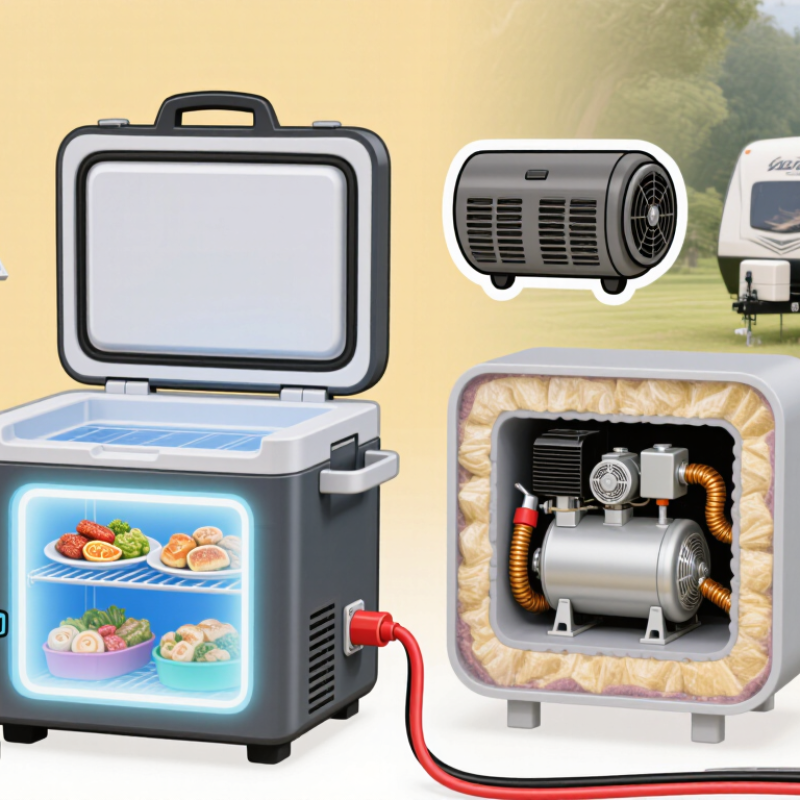
A 12v Rv Fridge is a compressor refrigerator designed to run directly from a 12-volt battery system. Unlike many absorption refrigerators, it does not require propane or shore power for basic operation. Its compressor circulates refrigerant through a sealed cooling circuit. Heat leaves the cabinet, while cold air remains inside.

RV electrical-safety educator Mike Sokol offers a practical warning: “A refrigerator may be efficient, but it still depends on a healthy battery system.” That point matters beside a campsite. A fridge can display a normal temperature while a weak battery quietly drops overnight. Solar panels, a converter, an alternator, or shore power may recharge the battery, but each system behaves differently.

Inside the cabinet, a thermostat activates the compressor when the temperature rises. Thick insulation slows heat entering from the warm exterior. Opening the door repeatedly defeats some of that effort. So does placing hot food inside. Small details matter.

The power label can mislead. Real consumption changes with weather, ventilation, food load, and thermostat settings. A unit rated at a few amps may still use substantial energy across a full day. This is where many buyers become overly confident.

This guide explains how a 12v Rv Fridge works, what components support it, and why battery capacity deserves careful attention. It also examines installation limits, cooling performance, and common operating mistakes. The technology is simple in principle. Camping conditions are not.
What Is a 12V RV Fridge and How Does It Work?
Table of Contents [Hide]
1 Definition and Core Purpose of a 12V RV Fridge
2 Main Components Inside a 12V RV Fridge
3 How a 12V RV Fridge Produces and Maintains Cold
4 Power Use, Battery Requirements, and Energy Efficiency
5 Installation, Maintenance, and Common Operating Issues

Definition and Core Purpose of a 12V RV Fridge

What Is a 12V RV Fridge and How Does It Work?

A 12V RV fridge is a compact refrigerator powered mainly by a 12-volt direct-current electrical system. Its core purpose is keeping food and drinks cold during travel, camping, and overnight stops. Unlike a traditional household refrigerator, it is designed for mobile living and limited energy supplies. Most models use a compressor, which circulates refrigerant through cooling coils. A thermostat starts or stops the compressor as the interior temperature changes.

The fridge usually draws power from the RV’s house battery. Solar panels, a running engine, or an external charger can replenish that battery. This arrangement allows cooling when the vehicle is parked without shore power. However, battery capacity matters greatly. A small battery may seem adequate in the morning but become weak after a warm afternoon. That detail is easy to overlook.

Inside, cold air collects around the evaporator area, so placing food too tightly can restrict airflow. Leave small gaps around containers. Keep the door closed as much as possible. Every opening lets warm, humid air enter. In practical use, pre-chilled food reduces the fridge’s workload, while a hot interior requires longer compressor operation. The term “12V” can also be slightly misleading; actual voltage may rise or fall while charging. Poor ventilation, damaged wiring, or an aging battery can affect performance. A temperature check with a separate thermometer is wiser than trusting the control dial alone.

Main Components Inside a 12V RV Fridge

A 12V RV fridge uses direct-current power from the vehicle battery or a separate leisure battery. Its main job is simple: remove heat from the cabinet. The parts inside make that process possible.

The compressor is the working heart of the fridge. It squeezes refrigerant gas and raises its pressure and temperature. The condenser then releases heat through external coils or a nearby heat exchanger. As the refrigerant cools, it becomes a liquid. The expansion device lowers its pressure, making the refrigerant cold. Inside the cabinet, the evaporator absorbs heat from food and air. The refrigerant then returns to the compressor. The cycle continues.

A thermostat or electronic controller measures cabinet temperature. It switches the compressor on and off to reduce energy use. Some models also use a small fan to move air across the condenser. Thick insulation slows heat entering from outside, while the door gasket limits warm air leaks. The control board may protect the compressor during low voltage or overheating. A fuse near the battery is also essential for safer wiring. Check it carefully. Poor cable size can cause voltage loss, weak cooling, or repeated shutdowns. The fridge may still run, but not correctly. In practice, a level cabinet, clean ventilation area, and stable 12V supply often matter as much as the internal components. The simple explanation is helpful, but incomplete. Ambient heat, frequent door opening, and packed shelves can change performance noticeably.

How a 12V RV Fridge Produces and Maintains Cold

A 12V RV fridge creates cold by moving heat, not by producing cold air. Its compressor draws direct current from the battery and compresses refrigerant into a high-pressure gas. The condenser releases heat outside the cabinet. The refrigerant then expands inside the evaporator, becomes cold, and absorbs heat from food and drinks. A thermostat starts and stops the compressor as temperatures change. Quietly, it works in cycles.

The U.S. Department of Energy’s refrigerator test procedure uses a 90°F ambient condition, showing why hot campsites can increase energy demand. In real use, a compressor fridge often consumes about 30 to 60 amp-hours daily, depending on size, insulation, ventilation, and door openings. That range is practical, not guaranteed. A loose door seal can waste more power than expected. Small details matter.

Battery voltage also affects performance. Long, thin cables create voltage drop, so the compressor may struggle during startup. A short, correctly sized cable helps maintain stable cooling. Good airflow behind the fridge is equally important; trapped heat makes the condenser work longer. The RV Industry Association’s 2024 market data report recorded more than 300,000 wholesale RV shipments in 2023, reflecting the scale of mobile living equipment. Yet laboratory figures rarely match a crowded campsite. Shade, warm groceries, and frequent opening can change results quickly. A simple energy monitor reveals the truth better than an optimistic estimate.

Power Use, Battery Requirements, and Energy Efficiency

A 12V RV fridge uses a compressor to cool food directly from the vehicle’s 12-volt electrical system. Unlike gas absorption models, it does not need propane or shore power. The compressor cycles on and off, using energy mainly when the cabinet temperature rises. In warm weather, frequent door opening can increase runtime noticeably.

Power use varies with size, insulation, airflow, and outdoor temperature. A compact unit may draw 2–5 amps while running, but its daily consumption often falls between 30 and 60 amp-hours. That figure is not fixed. In practical RV testing, a fridge placed in direct sun used more energy than the same fridge under shade. Small details matter. Keep the condenser area ventilated, pre-cool food at home, and avoid placing hot containers inside.

Battery planning requires more than reading the fridge’s running current. A 12V, 100Ah battery may provide about 1,200 watt-hours theoretically, but usable capacity depends on battery chemistry and safe discharge limits. Other loads, such as lights, fans, and water pumps, reduce the available reserve. My first estimate was too optimistic because I ignored overnight consumption and cloudy weather. A safer calculation uses the fridge’s measured daily amp-hours, adds other loads, then includes a reserve of 20–30 percent. Correct cable sizing also matters, since voltage drop can reduce compressor performance and create unnecessary losses.

Installation, Maintenance, and Common Operating Issues

A 12V RV fridge uses a direct-current compressor to remove heat from an insulated cabinet. Unlike absorption models, it does not need propane or a permanent 120V supply. The compressor draws power from the house battery, solar system, or converter. The RV Industry Association reported 313,174 wholesale RV shipments in 2023, showing why dependable mobile refrigeration matters to more owners and technicians.

Installation affects performance more than many buyers expect. Use a dedicated, fused circuit with correctly sized cable, because voltage drop can stop the compressor during startup. Keep the fridge level, leave clear airflow around the condenser, and avoid placing it beside an engine compartment. Follow the vehicle manufacturer’s wiring guidance and applicable RV electrical standards. A loose ground may look harmless. It is not.

Maintenance should include cleaning dust from ventilation openings, checking door seals, and inspecting terminals for heat marks or corrosion. Battery voltage deserves attention. A fridge that works at the campsite may fail overnight when the battery is weak. Common symptoms include clicking, repeated restarting, poor cooling, and heavy frost near the door. In practical service work, low voltage is often blamed on the fridge too quickly. I still see this mistake. Measure voltage at the fridge while the compressor starts, not only at the battery. The U.S. Department of Energy’s battery guidance also stresses proper charging and temperature control, which supports longer battery service life. Performance changes with hot weather, crowded shelves, and frequent door opening. That part is easy to underestimate.

12V RV Refrigerator: Estimated Daily Energy Use

A 12V RV refrigerator uses a DC compressor that cycles on and off to maintain the selected temperature. As ambient temperature rises, the compressor normally runs longer and battery consumption increases.

The figures below are representative estimates for a compact, well-insulated compressor refrigerator operating from a 12V battery. Actual consumption depends on refrigerator size, thermostat setting, ventilation, door openings, food load, and battery condition.

Article Source:

  • 12v Car Freezer
  • China Wholesale 12v Car Freezer Supplier
  • Trailers
  • Parts
  • About
  • Contact
  • Find a Dealer
1-800-LOADRTE
©2017 - 2025 Load Rite Trailers, Inc
  • Terms & Conditions
  • Privacy
  • Site Map