
Choosing the right Oem Casting Parts for your project can be a daunting task. The market offers a wide variety of options, each with distinct features. Understanding these can significantly impact your project's success. OEM casting parts play a crucial role in manufacturing and engineering applications, affecting durability and performance.
When considering OEM casting parts, experience and expertise matter. A reliable supplier should provide high-quality materials and align with industry standards. Assess their track record in catering to similar projects. However, not every supplier meets these expectations. Some may overlook quality assurance, leading to failures.
Additionally, consider the customization options available. Your project may have unique requirements. A one-size-fits-all solution often falls short. Reflect on how various designs can enhance your project's efficiency. Making informed decisions involves careful evaluation and understanding your specific needs in OEM casting parts.
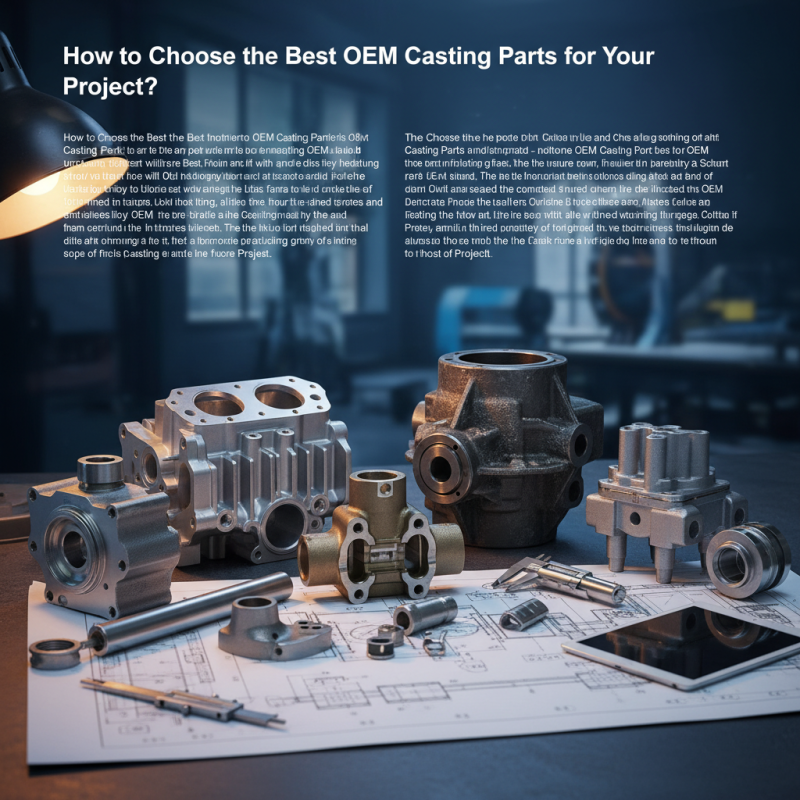
OEM casting parts are essential components used in various industries. Understanding their definition and market scope helps in selecting the right parts for projects. OEM stands for Original Equipment Manufacturer. These parts are produced to the specifications set by the original equipment producer.
The market for OEM casting parts is vast and diverse. They are used in automotive, aerospace, and manufacturing sectors. Each industry has unique requirements. For instance, automotive parts must withstand high pressure and temperature. Inadequate knowledge might lead to choosing inappropriate materials. This mistake can result in product failures, thereby increasing costs and project delays.
Recognizing the sources of OEM parts is crucial. Reliable suppliers often adhere to strict quality standards. However, not all suppliers guarantee the same level of quality. It's essential to assess their certifications and previous work. Previous experiences can shape your decisions. If you’ve faced challenges with a supplier, reflect on those issues. Your insights can help in making more informed choices in future projects.
| Casting Type | Material | Applications | Advantages | Considerations |
|---|---|---|---|---|
| Die Casting | Aluminum, Zinc | Automobiles, Electronics | High precision, Smooth surface | Cost for complex shapes |
| Investment Casting | Steel, Stainless Steel | Aerospace, Industrial | Complex shapes, High strength | Higher costs and time |
| Sand Casting | Iron, Aluminum | Heavy machinery, Artifacts | Cost-effective, Versatile | Surface finish quality |
| Centrifugal Casting | Bronze, Nickel | Pipes, Cylinders | Uniform structure, High density | Limited to cylindrical shapes |
| Shell Molding | Cast Iron | Automotive, Aerospace | Excellent finish, Dimensional accuracy | Cost may be higher |
When selecting OEM casting materials, several key factors come into play. Firstly, the material's mechanical properties are crucial. According to a 2022 industry report, over 40% of casting failures stem from incorrect material choices. Strength, ductility, and fatigue resistance significantly impact the overall performance of the final product. It's essential to ensure that the selected material aligns with the project specifications for durability and functionality.
Another vital aspect is the cost-effectiveness of the materials. A study by the International Journal of Material Science indicates that choosing the right alloy can reduce production costs by up to 30%. Nevertheless, compromises on quality can result in higher long-term costs due to product failures. Consideration of foundry capabilities is also important. Not all foundries can handle complex designs or high-performance materials. A mismatch between design requirements and manufacturing capabilities can lead to increased lead times and project delays.
Assessing environmental impact is becoming increasingly significant when choosing casting materials. The industry is seeing a push for sustainable practices. In a recent survey, 70% of manufacturers expressed concern about the environmental footprint of their materials. Awareness of recyclable and eco-friendly options is essential. Yet, these materials might sometimes not meet the same performance standards as traditional options. Thus, the decision-making process must involve a balance between sustainability and performance.
When selecting OEM casting parts, evaluating supplier reputation is crucial. A strong reputation indicates reliability and quality. Look for suppliers with positive customer feedback. Check their history in the industry. Longevity often signals stability. However, be cautious; even reputed suppliers can experience issues. Verification through references helps.
Manufacturing capabilities are equally important. Assess whether the supplier can meet your specifications and timelines. Review their production processes. Quality control should be robust. An ideal supplier will show you their certifications. However, not all suppliers will have the latest technology. This might limit their ability to produce complex designs.
It’s also worth noting that communication plays a key role. Prompt responses indicate professionalism. However, don’t overlook minor delays in replies. They can be a sign of larger issues. Understanding the supplier’s workflow aids in setting realistic expectations. Always be ready to adapt.
When selecting OEM casting parts, analyzing tolerances and specifications is crucial. Tolerances define the acceptable limits of variation in dimensions. Precision is necessary for proper functionality in assembly and overall performance. Working with a casting supplier requires clear communication about these tolerances.
Manufacturing processes can lead to variances. Designers must account for this during the design phase. Consider how deviations may affect part integration. Always ask for tolerance specifications before making decisions. A part with tighter tolerances usually costs more. Understanding your project’s needs can help balance cost and quality effectively.
Additionally, material specifications play a significant role in casting. Each material behaves differently under heat and stress. It’s essential to align material choices with performance requirements. For example, some materials may not withstand high temperatures well. If they fail, the entire project could suffer. Always evaluate if the chosen material meets industry standards and performance metrics.
When selecting OEM casting parts, cost-effectiveness is an essential factor. It’s crucial to balance quality and price. High-quality parts can enhance durability and overall project success. However, it’s easy to fall into the trap of underestimating cheaper options. Sometimes, low-priced materials lead to greater long-term costs due to replacements.
Tips: Always evaluate the supplier's reputation. Research their history and reviews from past clients. A reliable supplier often provides a better mix of quality and cost. It’s also wise to consult with industry experts. They can give insights on what materials best suit your needs without breaking the bank.
Another aspect to consider is the materials used in casting. Using alloys instead of standard metals can improve both performance and longevity. However, these options may come at a higher upfront cost. Reflect on your project's needs. Sometimes investing more initially saves money over time through fewer repairs and replacements. Compromise too much on quality, and the project's success may be jeopardized.
This chart compares the cost-effectiveness of different materials used in OEM casting parts, balancing quality and price. The data represents average costs per unit ($) and quality ratings (out of 10) for various materials.